
Early symbolic behavior of Homo sapiens is challenging to address yet arguably fundamental to the success of our species. Mammoth and plenty of raw vegetables.
 Fossils Are Filling Out The Human Family Tree Published 2019 Ancient Humans Neanderthal Early Humans
First even the earliest evidence of meat-eating indicates that early humans were consuming not only small animals but also animals many times larger than their own body size such as elephants rhinos buffalo and giraffes whereas chimpanzees only hunt animals much smaller than themselves.

Diet of of early modern homo sapiens. They got all the nutrition they needed from the variety in their diets. By the time of the Upper Paleolithic and modern Homo sapiens not only was a wide variety of plants consumed but a wide variety of animals snails and fish. They provide good evidence that plants underground storage organs such as tubers sedges fruits invertebrate and vertebrate animals leaves and bark were all on the menu for at least some.
We used ancient engravings from the South African Blombos Cave and Diepkloof Rock Shelter in a number of controlled cognitive experiments to qualify discussions about the evolution of early symbolic traditions. Early modern humans consumed more plants than Neanderthals but ate very little fish. Early Modern Homo sapiens.
Early modern humans consumed more plants than Neanderthals but ate very little fish. Taphonomic change in fish skeletons from Blombos Cave have been interpreted as capture of live fish clearly an intentional human behavior. The ability to build and use watercraft probably evolved very late in Homo sapiens evolutionary history and was certainly not part of an early archaic Homo sapiens toolkit.
Farmers and the societies that depend on them tend to rely on calories from a single crop like wheat or rice. Since 2010 evidence for gene flow between archaic and modern humans during the period of roughly 100000 to 30000 years ago has been discovered. Sites older than 150k include Florisbad Omo-Kibish Ngaloba and Herto.
Our species of humans first began to evolve nearly 200000 years ago in association with technologies not unlike those of the early Neandertals. As early Homo sapiens dispersed it encountered varieties of archaic humans both in Africa and in Eurasia in Eurasia notably Homo neanderthalensis. Paleoanthropologists agree that modern humans evolved in Africa about 200000 years ago yet the fossil evidence for the earliest examples of Homo sapiens is scarce.
Plenty of gazelle meat with the occasional wildebeest zebra and other game and perhaps the seasonal ostrich egg says Teresa Steele a paleoanthropologist at the University of California Davis. It is now clear that early Homo sapiens or modern humans did not come after the Neandertals but were their contemporaries. However about 35 million years ago early human species like Australopithecus afarensis and Kenyanthropus platyops began to also nosh on grasses sedges and succulentsor on animals that ate those plants.
Humans in North Africa Nazlet Sabaha Egypt are known to have dabbled in chert mining as early as 100000 years ago for the construction of stone tools. Europes Early Homo sapiens Ate Mammoth Meat and Plants. While early modern humans regularly hunted large herbivores faunal evidence from some LSA and UP sites suggests a shift to a broader dietary spectrum to include small game and fish see the chapter by Little.
By starting to eat calorie-dense meat and marrow instead of the low-quality plant diet of apes our direct ancestor Homo erectus took in enough extra energy at each meal to help fuel a bigger. On the early humans menu. We found that the engravings evolved over a period of 30000 y.
Occipital bone of an anatomically modern human from the fossil site Buran. Fossils of the earliest members of our species archaic Homo sapiens have all been found in AfricaFossils of modern Homo sapiens have been found in Africa and in many other sites across much of the world. Prior to about 35 million years ago early humans dined almost exclusively on leaves and fruits from trees shrubs and herbssimilar to modern-day gorillas and chimpanzees.
By Senckenberg Research Institute. Sites dating to about 100k include Klasies River Mouth Border Cave Skhul. In order to exploit the many different species consumed there was a wider variety of tools made than ever before available to humans.
Major fossil sites of early Homo sapiens. A ll people today are classified as Homo sapiens. Plants and the meat of mammoths red deer and horses were a major part of the diet of anatomically modern humans who lived in what is now.
Because early Homo sapiens might eat berries snails and rabbit one day and mushrooms fruits and mammoth the next they were rarely malnourished. One problem is the difficulty. Identify the possible explanations for the presence of archaic Homo sapiens sites on Southeast Asian islands such as Java.

 Ancient Tartar Other Dental Clues Reveal Unexpected Diet Of Early Human Relative Human Fossils Fossils Human Evolution
 Correlation Between Eating Less Meat And Shrinking Brains Neanderthal Man Was Primarily A Carnivore Cro Magnon Early Modern Neanderthal Cro Magnon Hominid
 Left Lateral Views Of African And Israeli Archaic And Early Modern Homo Download Scientific Diagram
 Pin On Health And Science
 Pin On Mammoths

 Pin On Anthropology The Human Body
The Partial Skull Of A Modern Human H Sapiens C Is Placed Between A Neanderthal L Skull And A Complete Modern Human Skull Food Carbohydrates Paleo Diet
 Pin On Biology
 I Love A Good Campfire Huddling Around The Campfire With Friends Cooking Food And Staying Warm Is My Favorite Ancient Humans Prehistoric Animals Early Humans
 Pin On Getting To Homo Sapiens
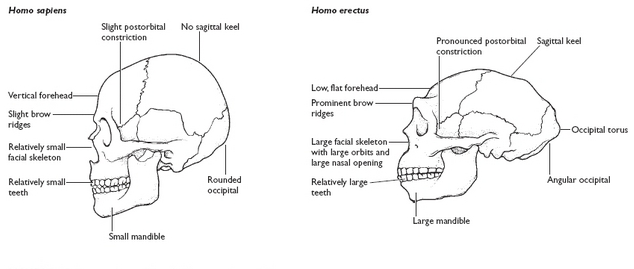 Homo Erectus Vs Homo Sapien General Difference Viva Differences
 Photo Of A Neandertal And A Modern Human Skull Shown Together For Comparison With Differences In Foreheads Brow Ridges And Fun Science Early Humans Evolution
 Ch 12 The Origins Evolution And Dispersal Of Modern People Flashcards Quizlet
 Neanderthals Diet 80 Meat 20 Vegetables Isotope Studies Shed A New Light On The Eating Habits Of The Prehistoric Humans Neanderthal Prehistoric Plant Eater
 Pin On Early Human Lapbook
 Early Human Lucy Swung From The Trees Hominid Human Evolution Early Humans
 Early Modern Humans Consumed More Plants Than Neanderthals But Ate Very Little Fish Neanderthal Early Humans Little Fish